
New Orleans is like no other Southern city. The mix of cultures, with strong French and Spanish influences, is more reminiscent of the Caribbean than the United States. Cajun and Creole cuisine, the birthplace of jazz music, and the French Quarter’s architecture set this city apart. Whether you’re into art, food, history, or music, New Orleans delivers an unforgettable experience.
Where to Stay in New Orleans
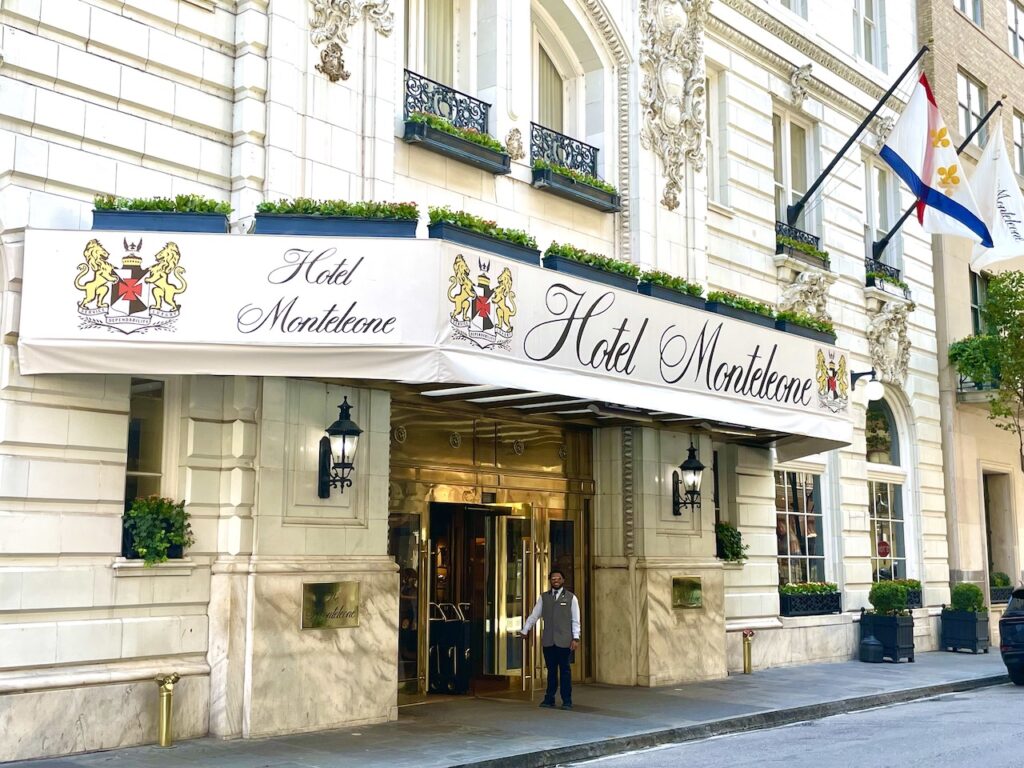
Hotel Monteleone
Step back in time to a hotel known for its old-world service and amenities. The luxurious Hotel Monteleon’s location on Royal Street is terrific, placing you right in the heart of the French Quarter near the famous Bourbon Street, and within walking distance to many attractions.
Inside, the lobby features glittering chandeliers and polished marble floors, reflecting the grandeur of a bygone era. It has been frequented by many famous writers, including Tennessee Williams, Ernest Hemingway, and William Faulkner.
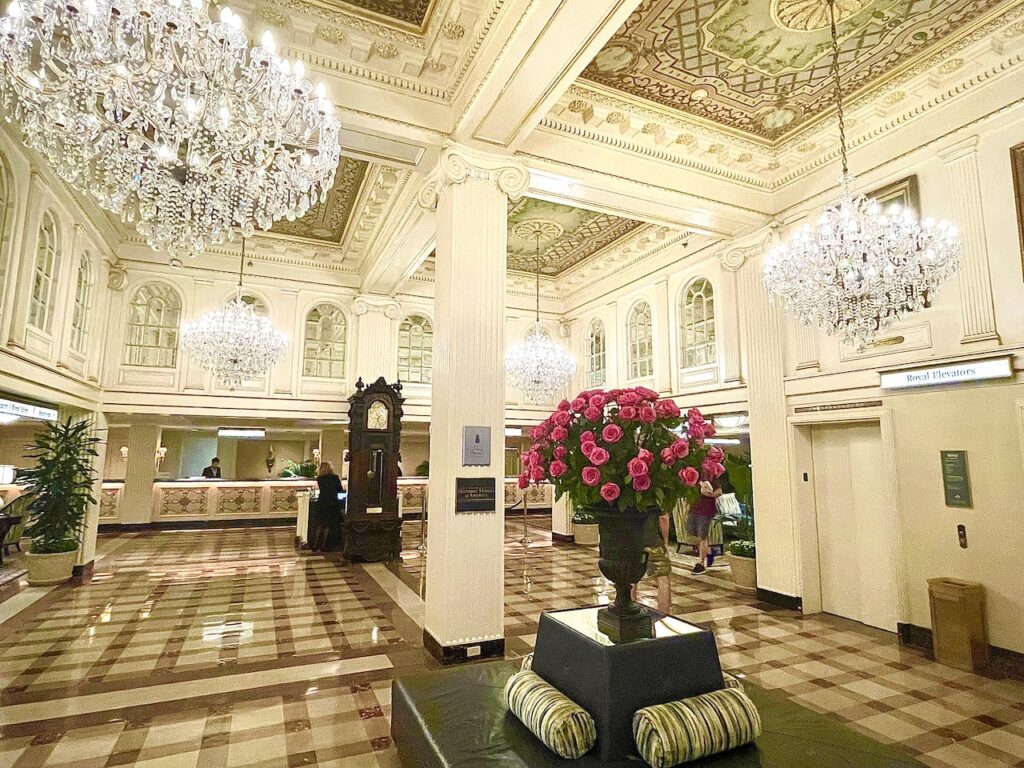
Hotel Monteleone: 214 Royal Street, New Orleans
Day One in New Orleans
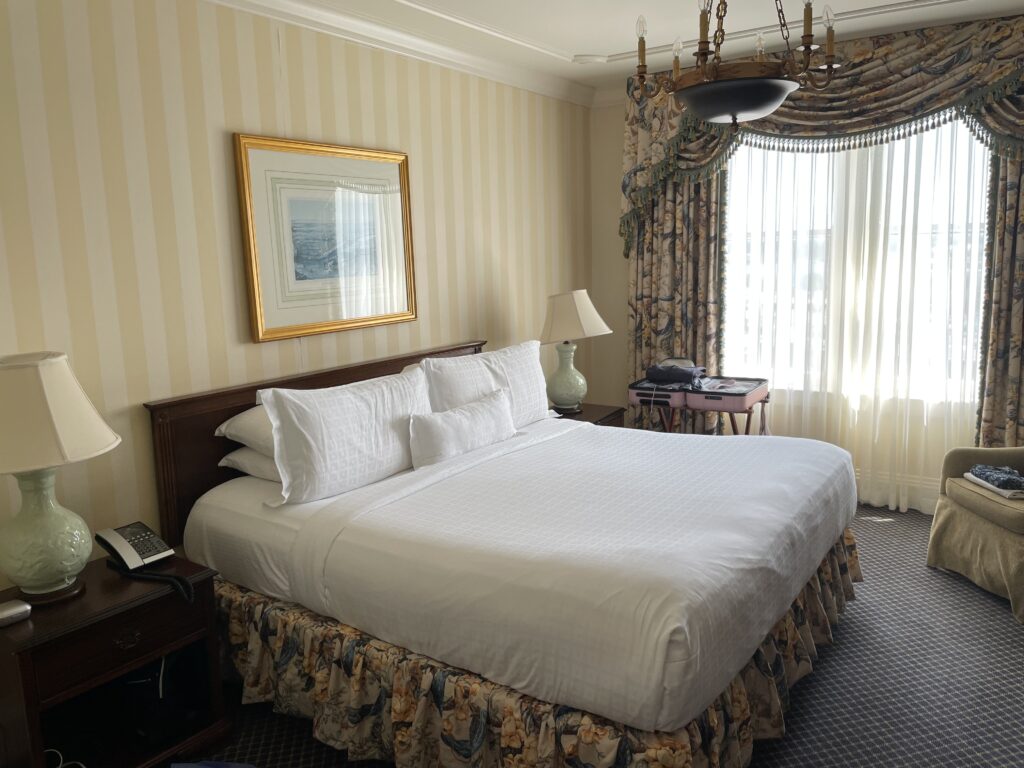
They had our room ready when we arrived around noon, so we were able to check in right away. However, if you have to wait until check-in time, you can store your luggage so you can get out and start exploring the French Quarter.
Noon: Lunch at The Gumbo Shop
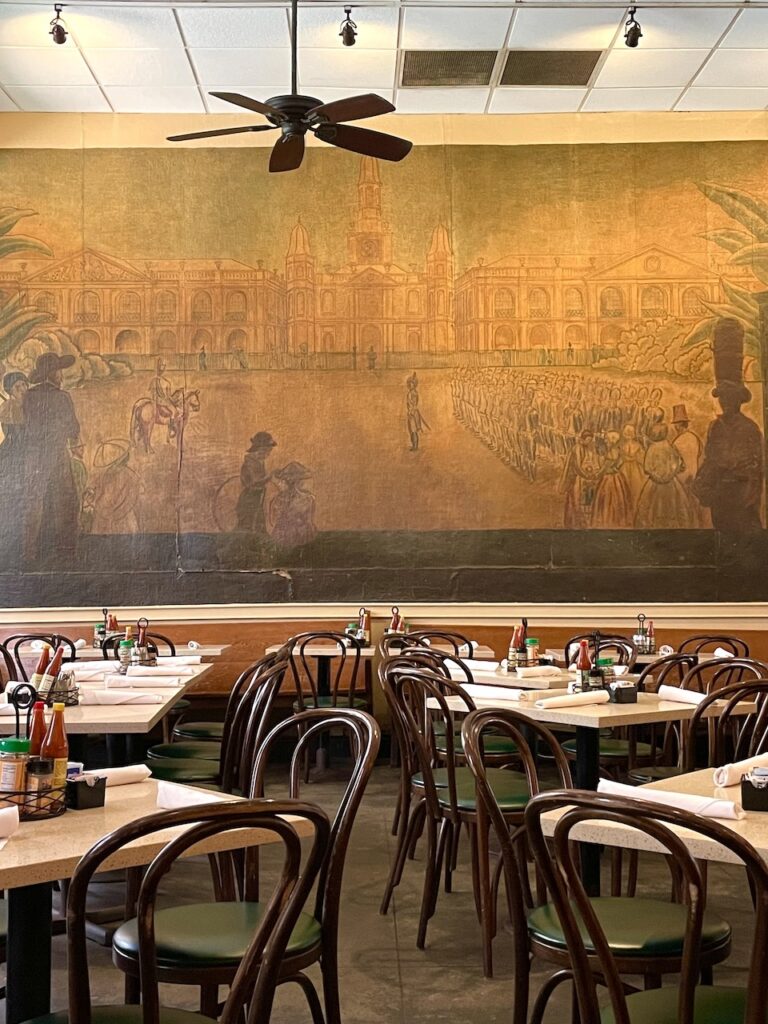
Since 1948, The Gumbo Shop has been serving authentic Creole flavors in the heart of the historic French Quarter. The restaurant has consistently won awards for its gumbo, serving some of the best in New Orleans. However, the Gumbo Shop doesn’t just serve world-renowned gumbo — its restaurant and full menu consists of seafood, chicken, sides, starters, handcrafted cocktails, and classic Creole cuisine. The Gumbo Shop is situated in one of the oldest buildings in the French Quarter, adding to its charm and historical significance. Their classic chicken and andouille gumbo was delicious.
The Gumbo Shop: 630 St. Peter St., New Orleans
Afternoon at Jackson Square
One of the most prominent landmarks in the French Quarter is
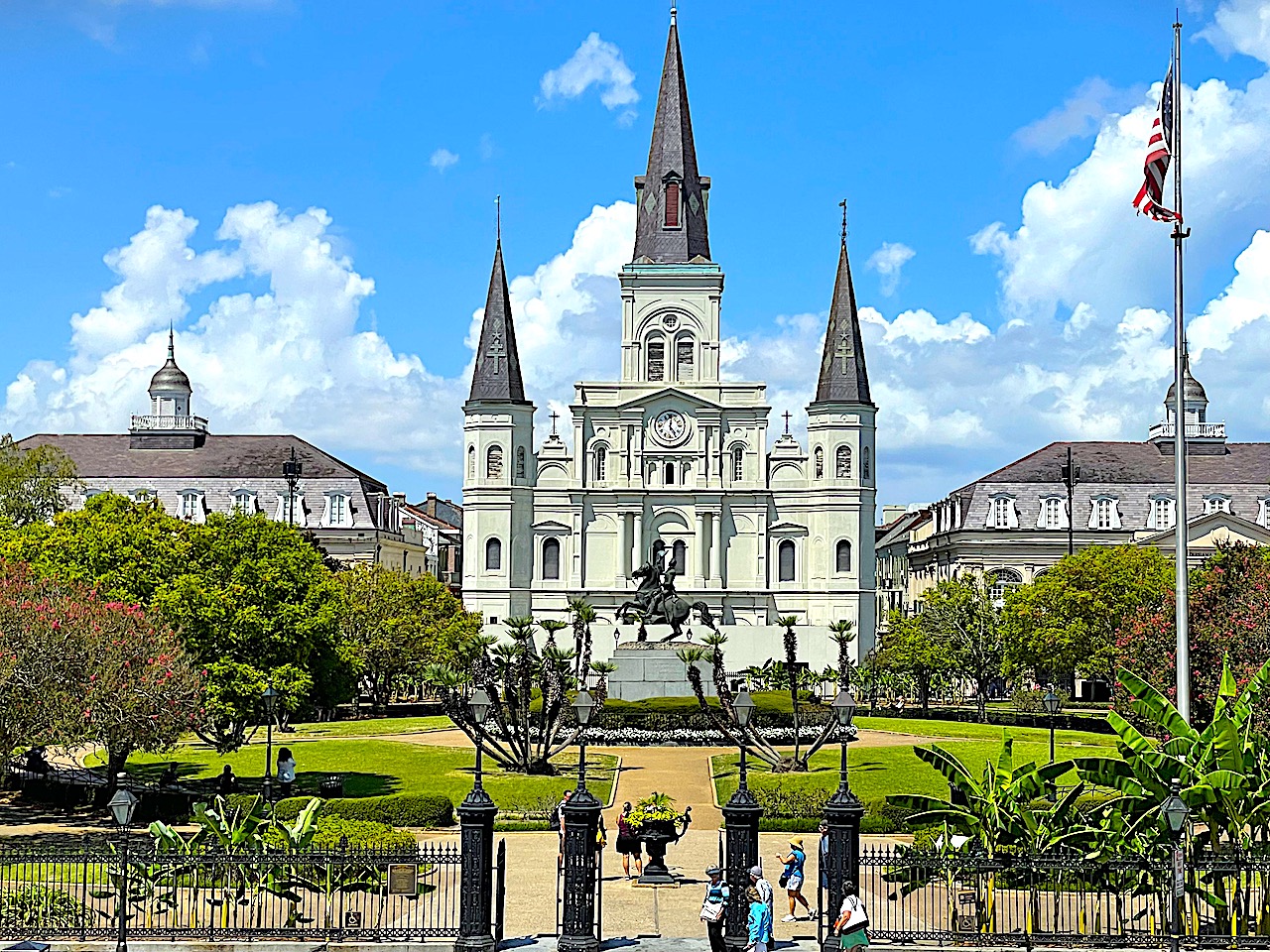
Jackson Square, and it’s the perfect place to start. Street performers, jazz bands, magicians, comedians, and palm readers flock to this area in addition to local artists. This area gets crowded later in the day, so if you want the perfect shot with no people in it, you have to go early. Head across Decatur St to Washington Artillery Park for a higher vantage point.
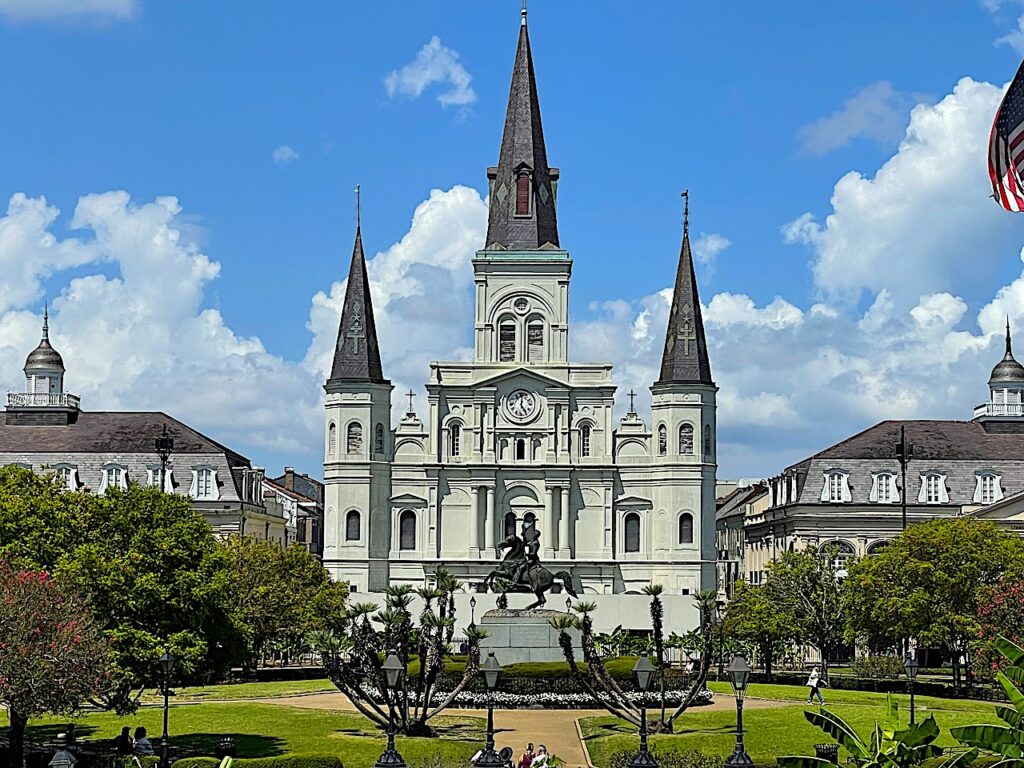
Jackson Square: 701 Decatur St, New Orleans
Street Musicians
While you experience New Orleans, take a moment to listen to the melodies of the street musicians, which entice you to pause and take in the music.
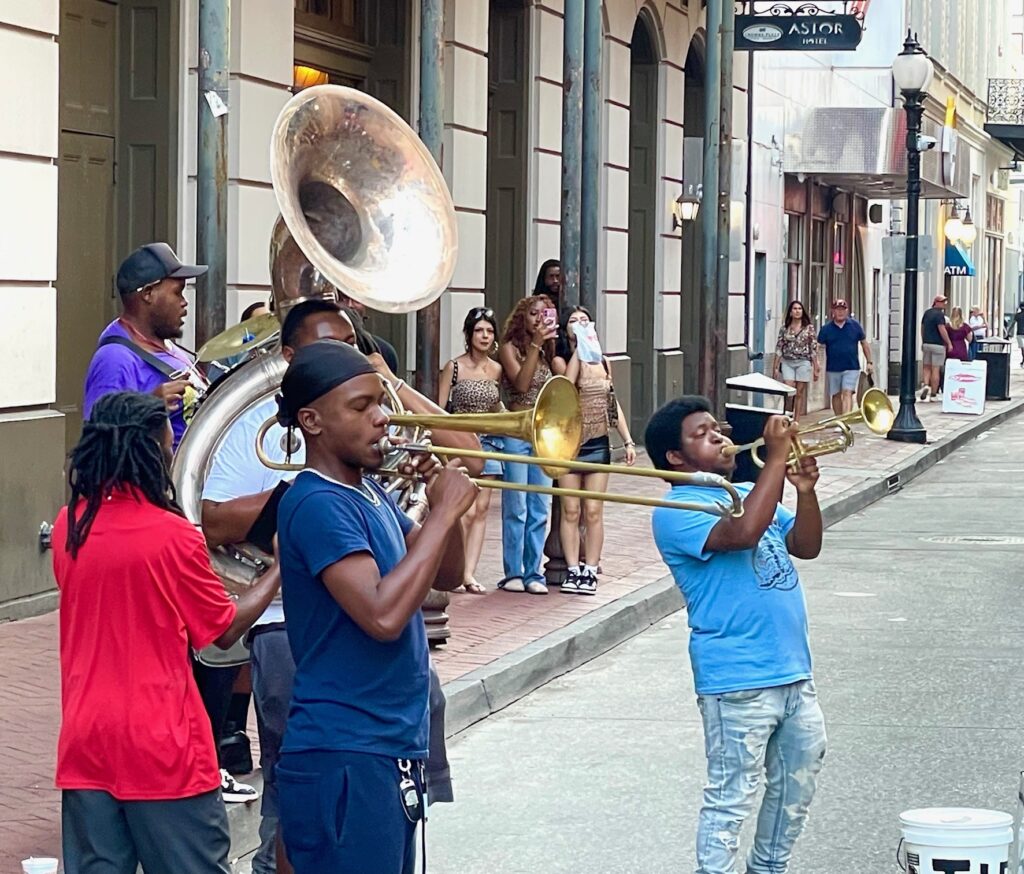
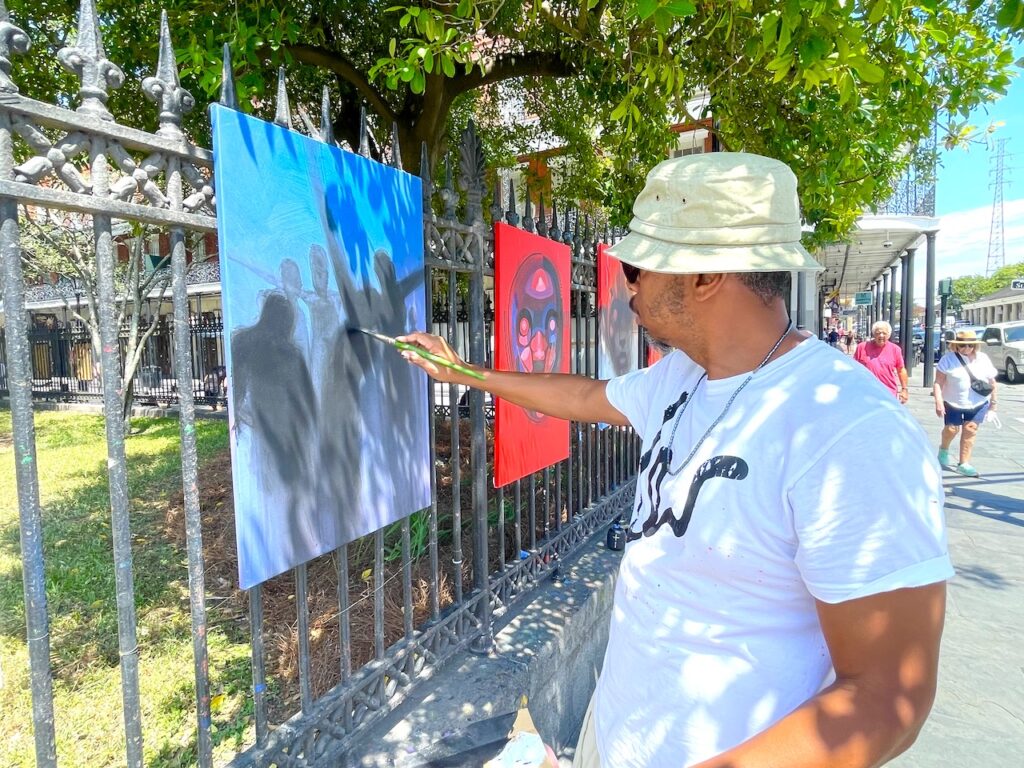
Street Artists
Artists showcase their talent, creating masterpieces right before your eyes. For over 50 years, artists have displayed their work on the square’s iron fence, including paintings, drawings, and portraits.
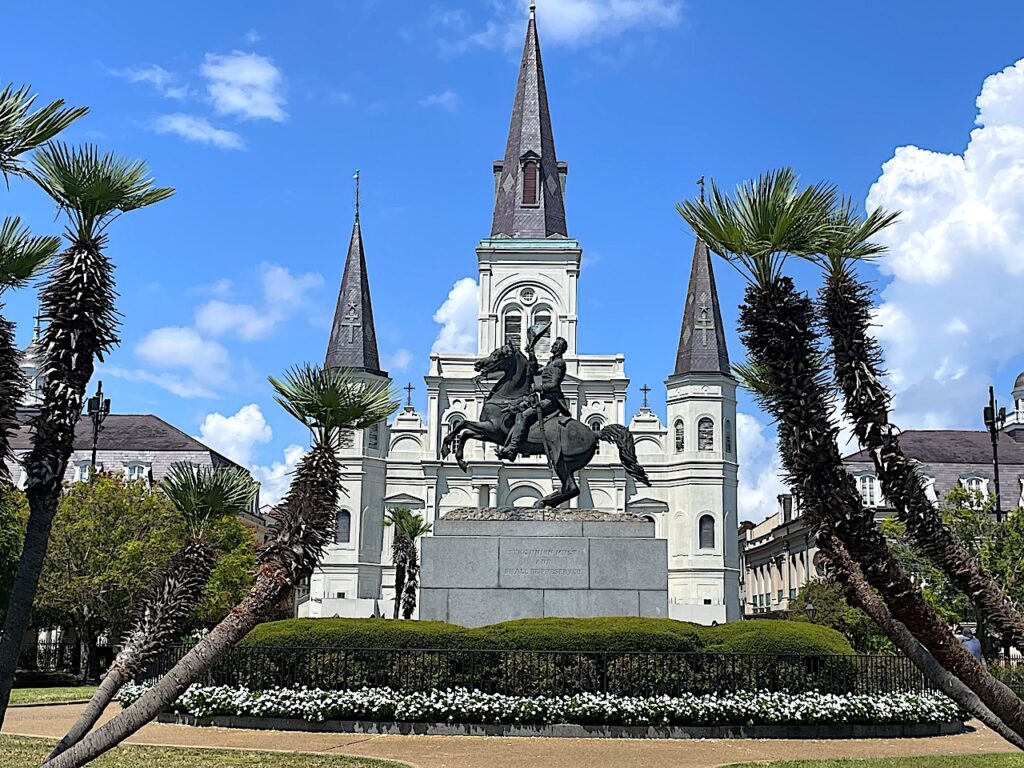
St. Louis Cathedral
Just steps away from Jackson Square, the St. Louis Cathedral stands as a symbol of New Orleans’ rich religious heritage and is one of the oldest cathedrals in the United States. It was originally built in 1724 and rebuilt twice after a hurricane and a fire. The present church overlooks beautiful Jackson Square and was dedicated in 1794.
St. Louis Cathedral: 615 Pere Antoine Alley, New Orleans
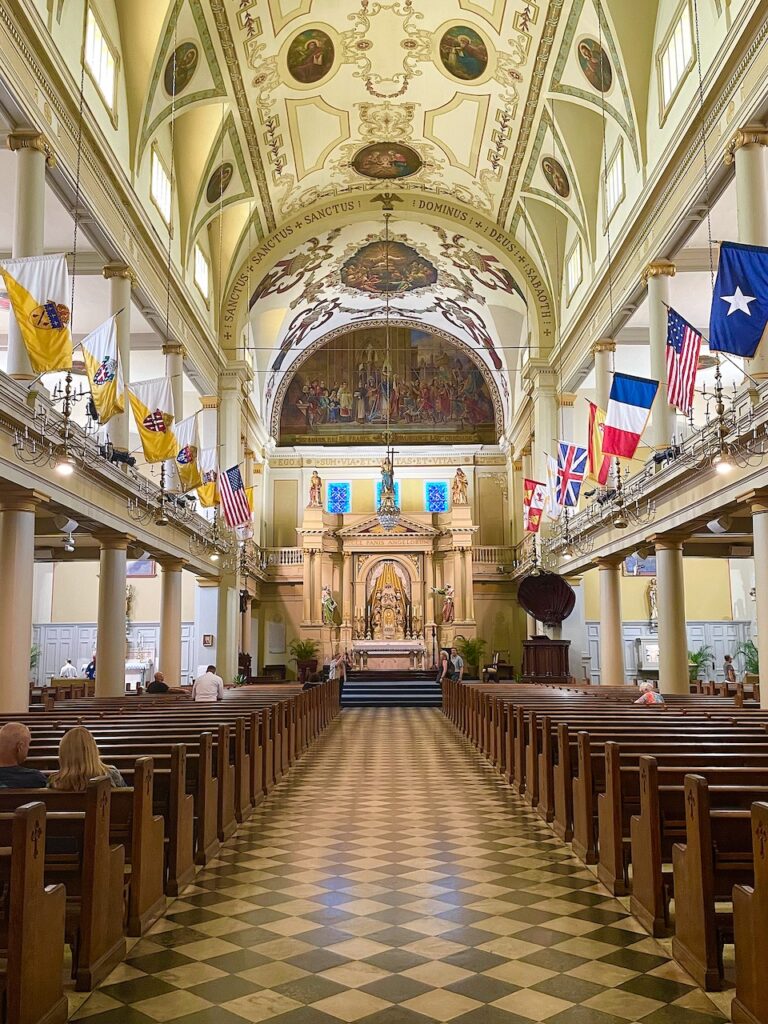
Enter inside to see its breathtaking interior and peaceful ambiance, including stained-glass windows, frescoes, and a Baroque high altar. The Cathedral Basilica of Saint Louis, draws visitors from all faiths and backgrounds.
Snack at Cafe Du Monde
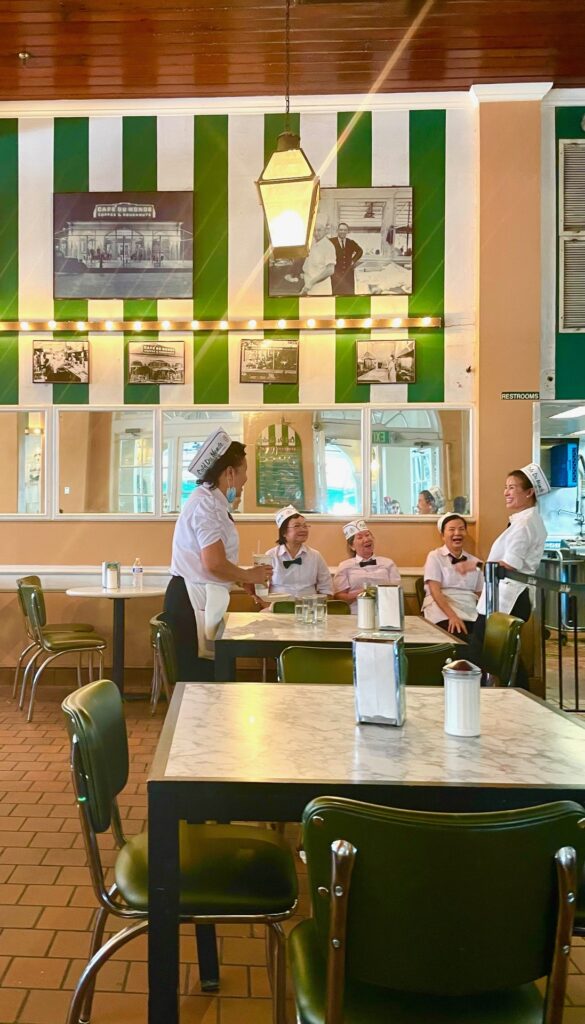
No visit to the Jackson Square area or New Orleans, for that matter, would be complete without a stop at Café Du Monde. This iconic coffee stand has been serving its famous café au lait and beignets since 1862, making you feel as if you’ve been transported to the streets of Paris. After a busy morning, these ladies are taking a break at Cafe Du Monde.
These dough boys are so good, the line to get your hands on them stretches down the block on most days. If you’ve never had beignets (“ben-yays”), they’re pillow-shaped pieces of dough that are fried and covered in powdered sugar. It’s a fried, warm, sweet, classic New Orleans treat. And it’s best paired with a café au lait, a blend of coffee and chicory mixed half and half with hot milk.
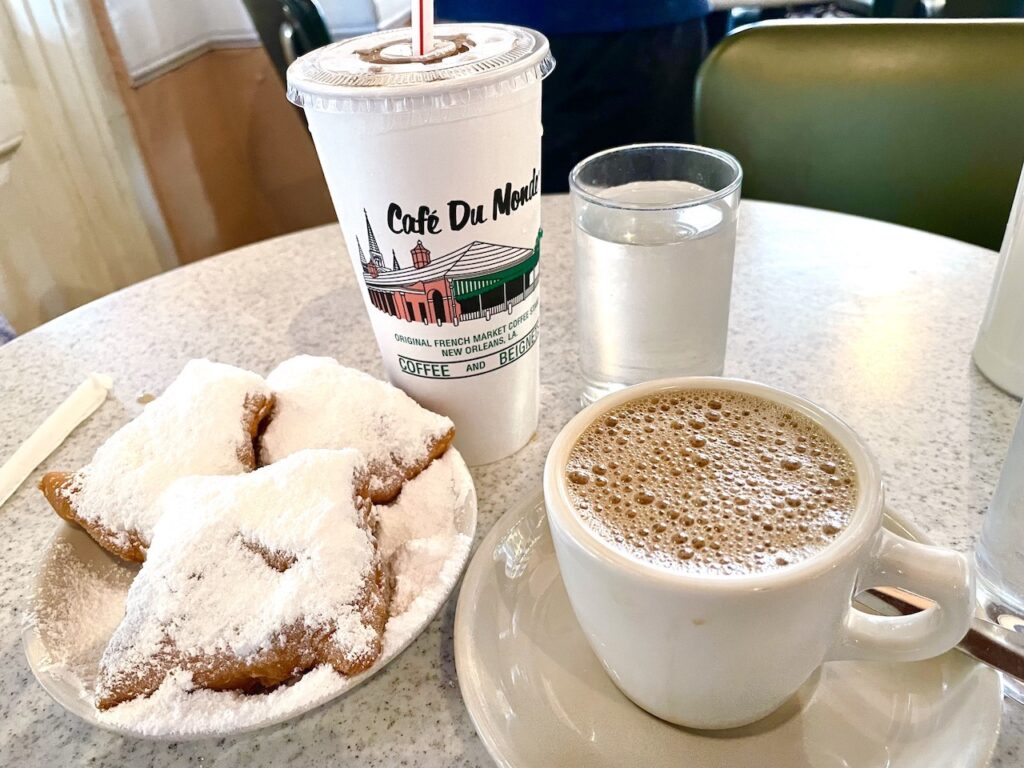
WORD OF ADVICE: You can’t eat these beignets covered with powdered sugar without making a mess. Don’t wear dark clothing; you will have sugar everywhere. But, Oh, so good!
Cafe Du Monde French Market: 800 Decatur St, New Orleans
The Royal Praline Company
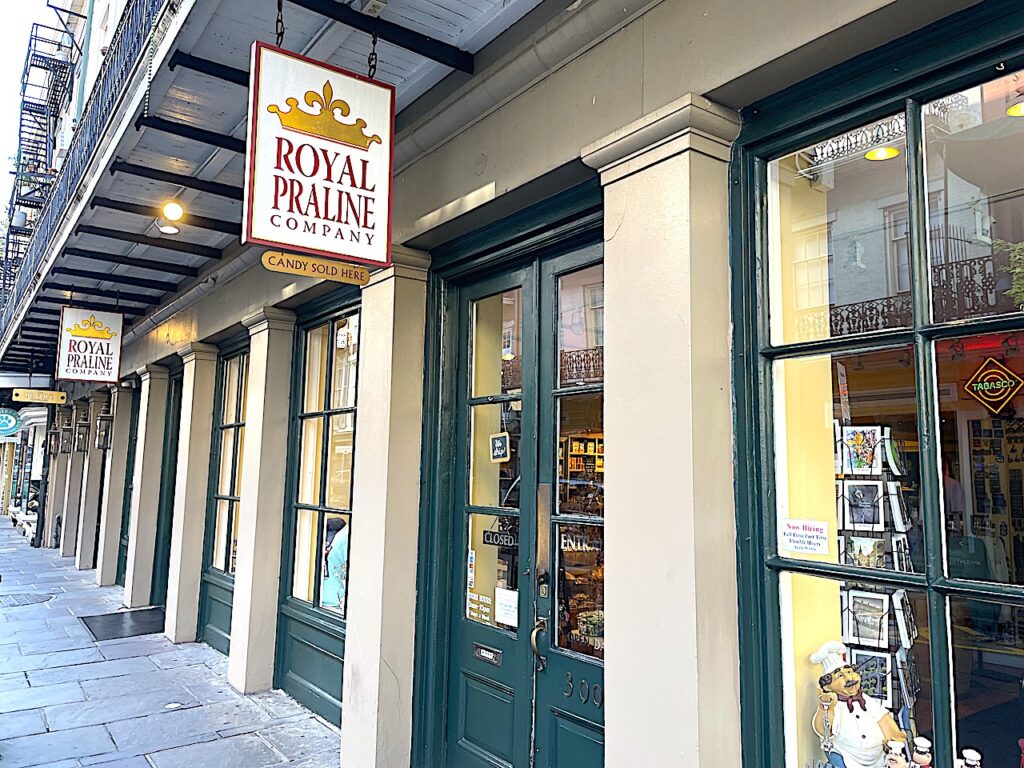
Royal Praline Company is famous for its handmade pralines, offering both creamy and chewy pralines using the finest ingredients, including fresh Louisiana pecans, which guarantee a high-quality and flavorful experience. The shop carries traditional New Orleans candies, coffee & spices, plus Crescent City-themed gifts. Established in 2007, the Royal Praline Company is a must-stop shop for all things New Orleans.
Royal Praline Company: 300 Royal St, New Orleans
The French Quarter
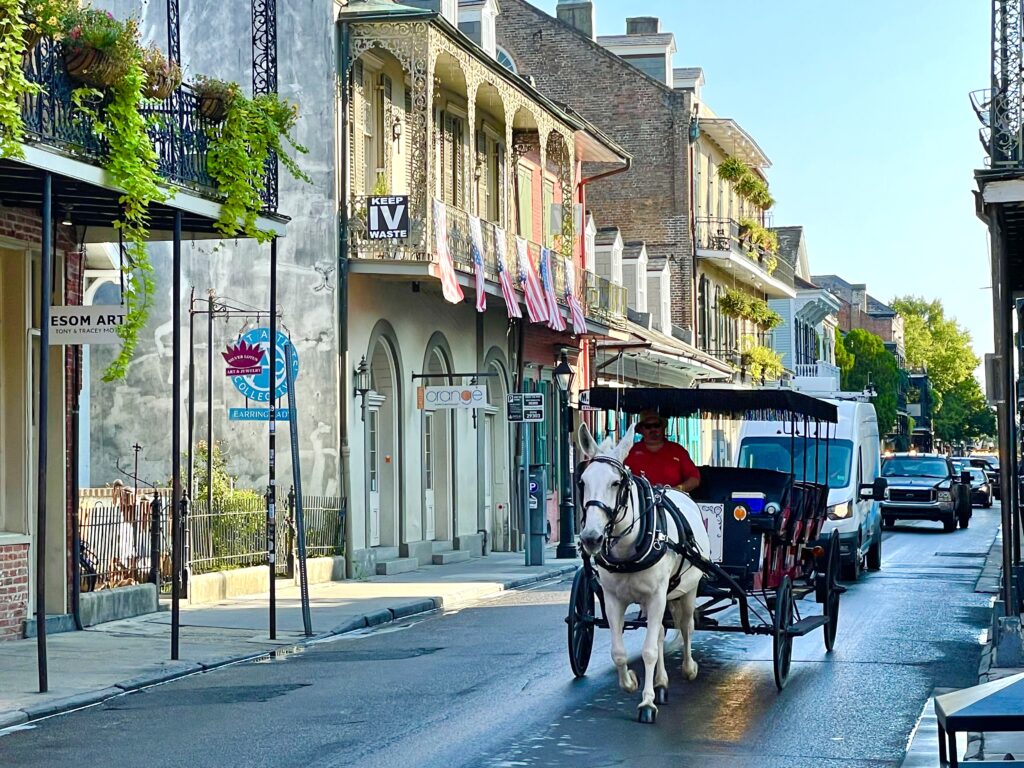
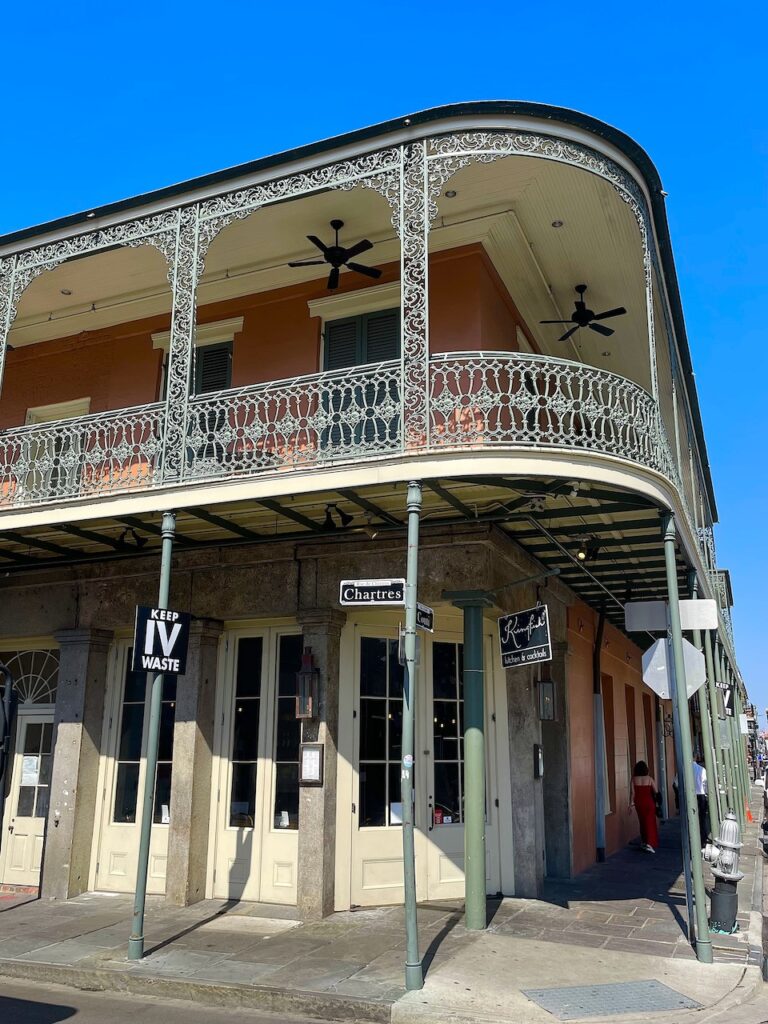
The French Quarter in New Orleans, also known as the Vieux Carré, is the oldest part of New Orleans. It is also a great area for dining and entertainment. The French Quarter boasts unique architecture that incorporates ironwork balconies, historic buildings, and charming courtyards. Most tourists visit the French Quarter of New Orleans, set along a bend on the Mississippi River.
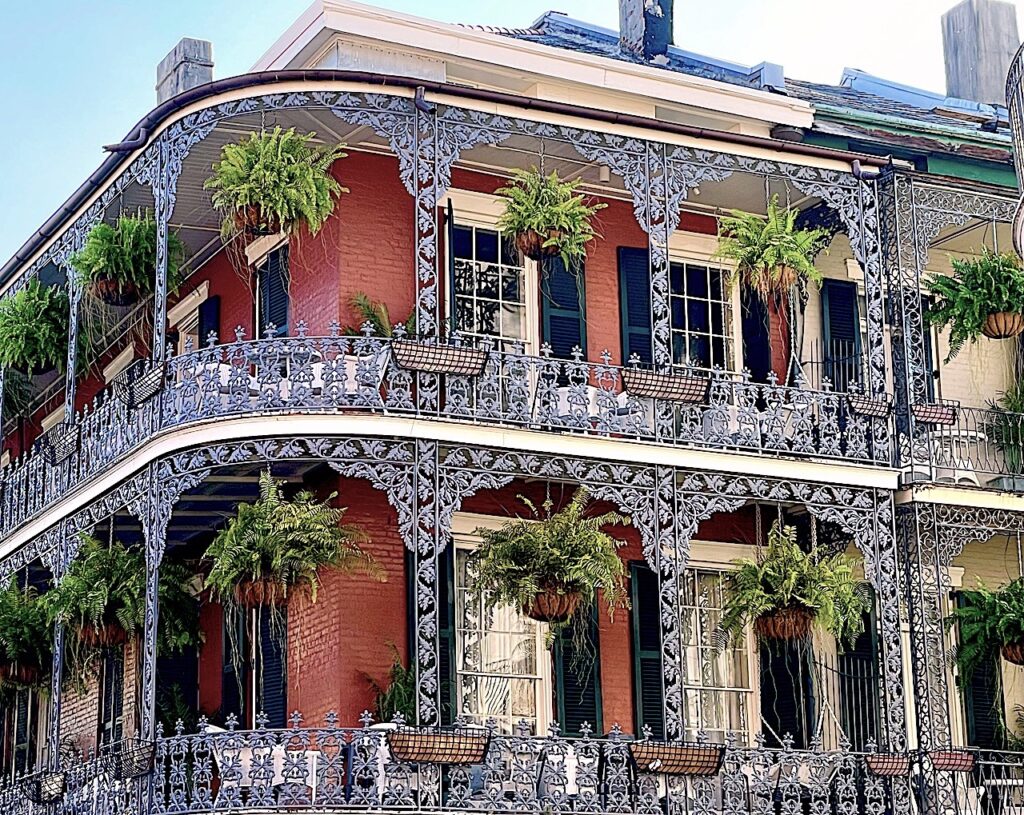
Often referred to as the Crown Jewel of New Orleans, the French Quarter is one of the city’s most historic neighborhoods. Here, you will find the infamous Bourbon Street, with jazz clubs, Cajun food, and lively bars. It’s the oldest and most well-known neighborhood in New Orleans, with a rich history and architecture that dates back to the French and Spanish colonial periods. The French Quarter is the center of many New Orleans traditions, including music, festivals, and cuisine.
The French Quarter’s Courtyards
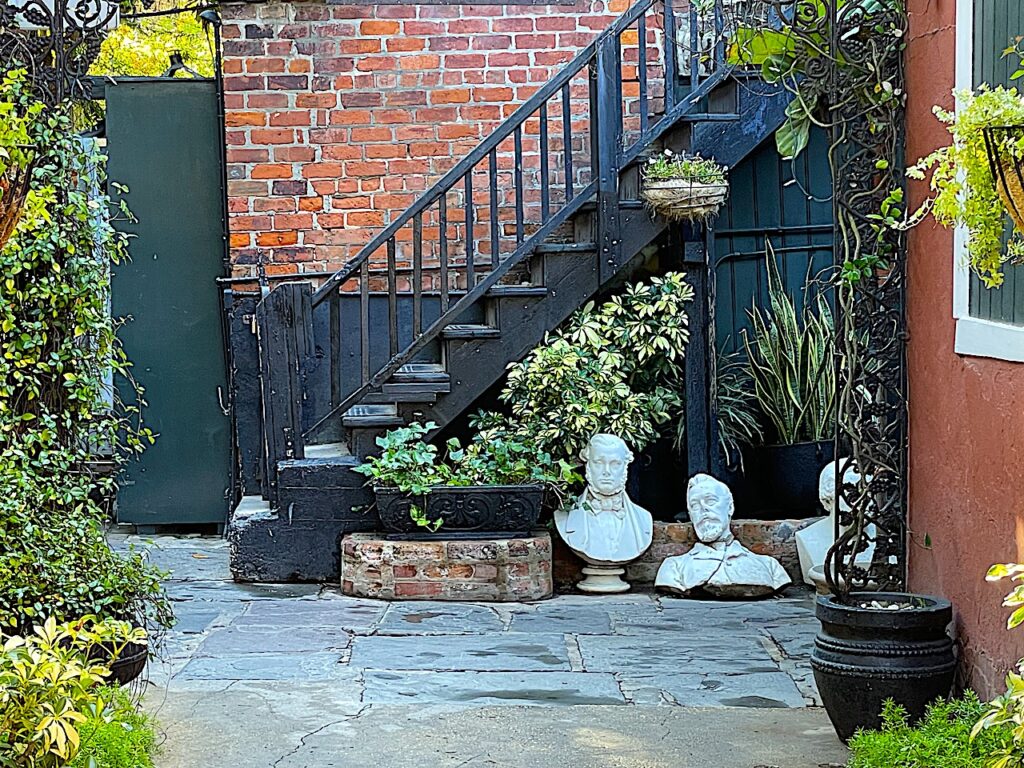
There are plenty of beautiful courtyards in the Quarter. Many of these are located on private property, but some are open to the public. Allow yourself to wander off the main streets and discover the hidden courtyards and secret gardens throughout the French Quarter. These quiet, hidden spaces can provide a serene oasis from the bustling city and are perfect for a moment of reflection.
Try a Hurricane at Pat O’Brien’s
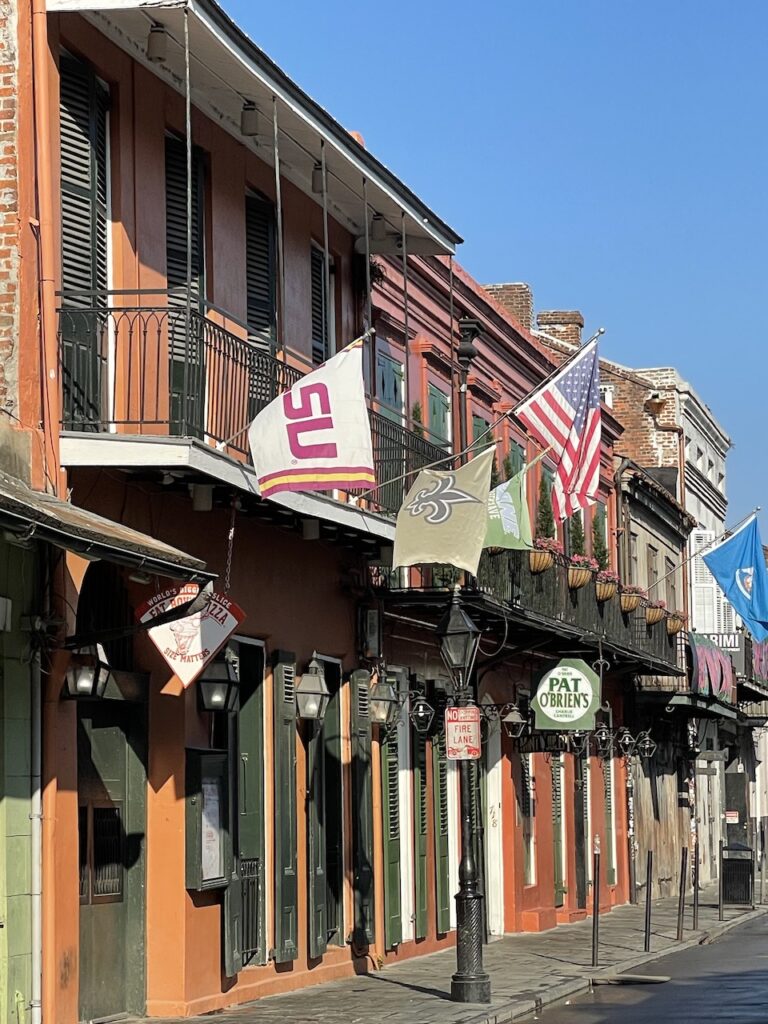
Before dinner, why not visit Pat O’Brien’s to try a New Orleans classic: the “Hurricane,” which is rum and fruit juice. Enjoy your drink in the back courtyard surrounded by the flaming fountain. The drinks are delicious but strong!
Pat O’Brien’s: 718 St Peter, New Orleans
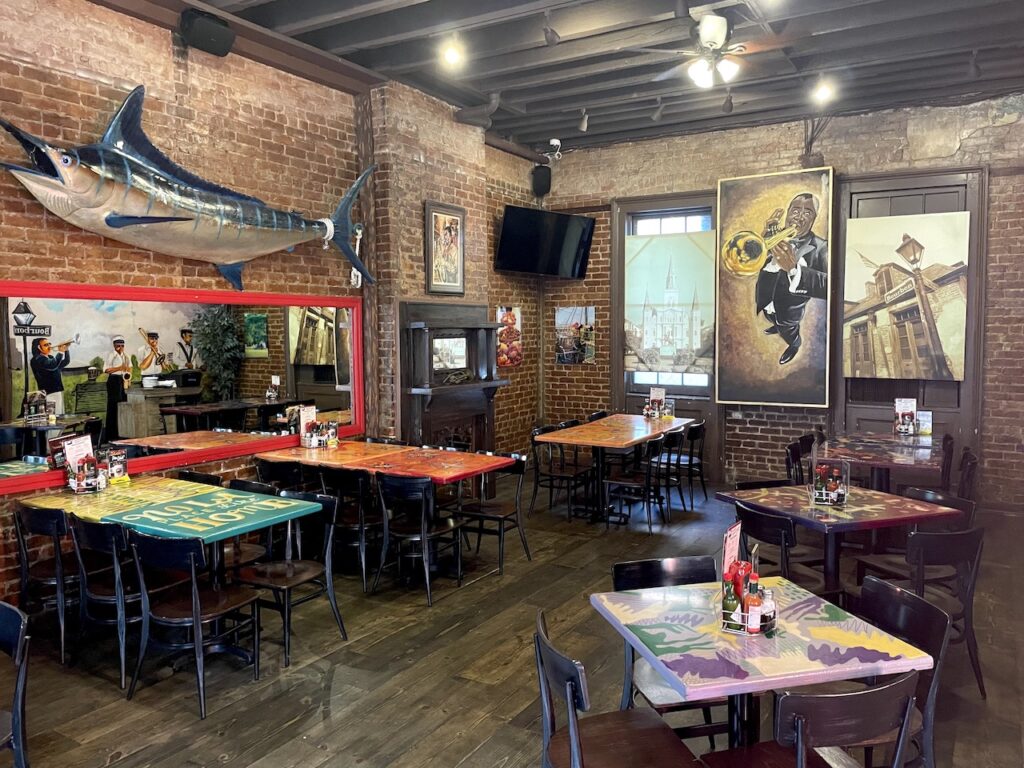
Dinner at Oceana Grill
You may have heard of Oceana Grill from the TV show, Kitchen Nightmares, but don’t let that steer you away from trying this restaurant! I had the Charbroiled Oysters and Red Beans and Rice, both of which were amazing—located in the heart of New Orleans at the corner of Bourbon and Conti Streets. They claim to serve the best crab cakes and gumbo in the French Quarter, as well as specialty po’boys, seafood, and a variety of Creole-inspired pastas.
Oceana Grill: 739 Conti St, New Orleans
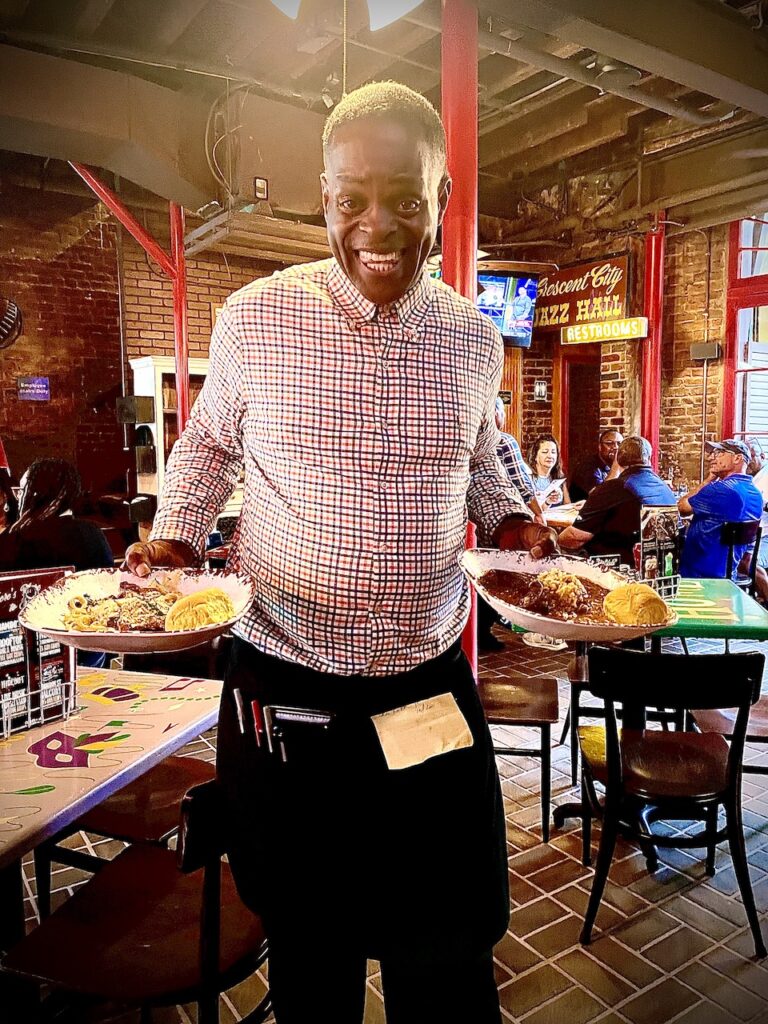
Our waiter, Damon, told us stories of being trapped on his rooftop with six kids when Hurricane Katrina hit in August of 2005. He says it was pitch black, and he feared alligators would get them at any time. Damon was just one of the many friendly faces we met during our three days in New Orleans.
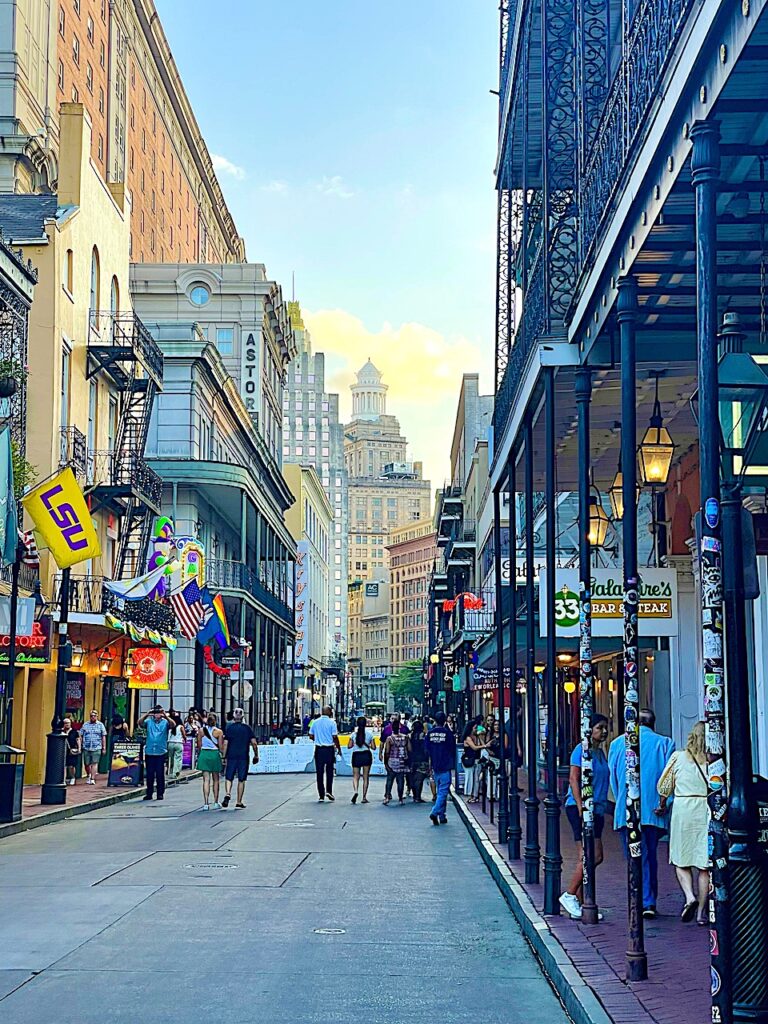
Bourbon Street
No visit to the French Quarter is complete without walking down Bourbon Street, famous for its vibrant nightlife. During the day, you can appreciate the historic architecture and visit some of the oldest bars in the United States. Bourbon Street is known for its drinking, gambling, and prostitution – a lot of which is still happening today.
Day Two in New Orleans
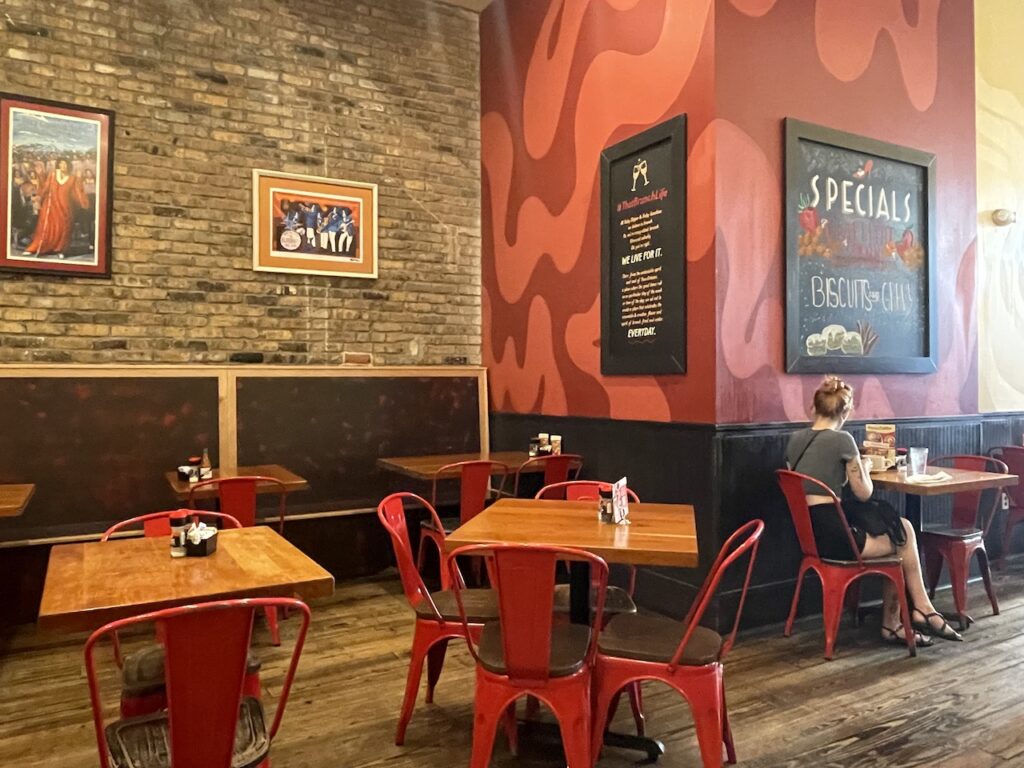
Breakfast at The Ruby Slipper Cafe
The Ruby Slipper, located on Decatur Street, is the perfect spot to grab a delicious breakfast before heading out to the World War II Museum. I had the Bananas Foster French Toast, which was delicious.
The Ruby Slipper: 204 Decatur Street. New Orleans
World War II Museum
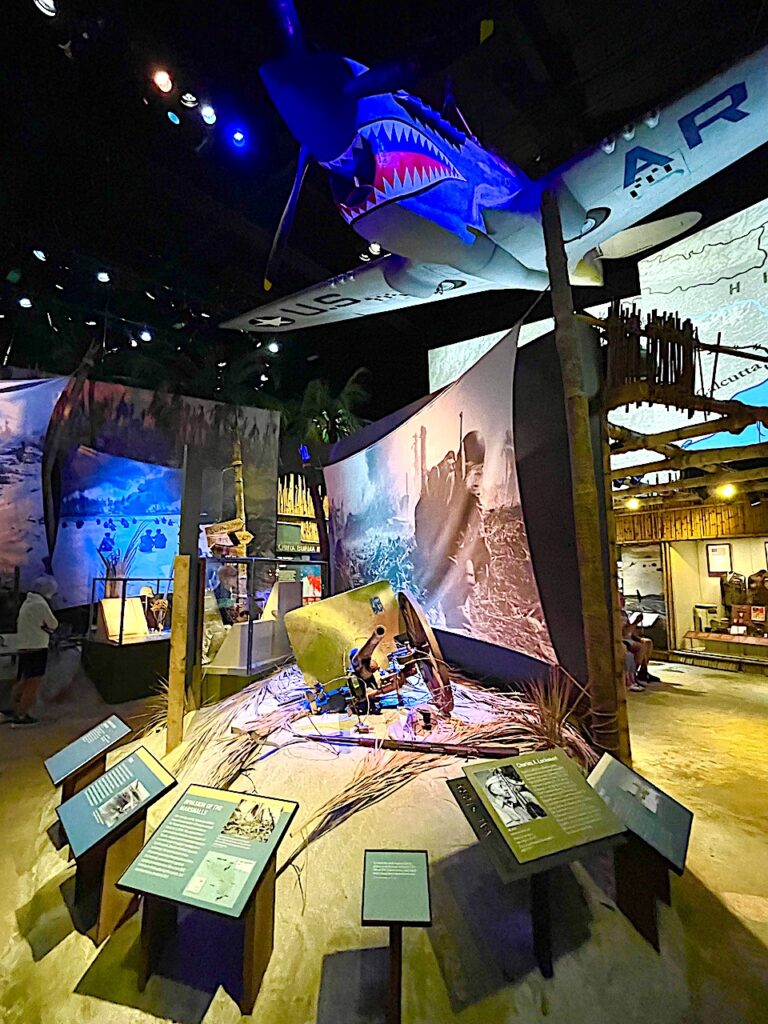
The National WWII Museum is a military history museum located in the Central Business District of New Orleans. The Museum’s focus is to explain why the war was fought, inspiring visitors to understand the price of freedom. The museum’s location here is significant because of the role Higgins Industries played in building the landing craft (Higgins boats). These boats were used in the amphibious invasion of D-Day.
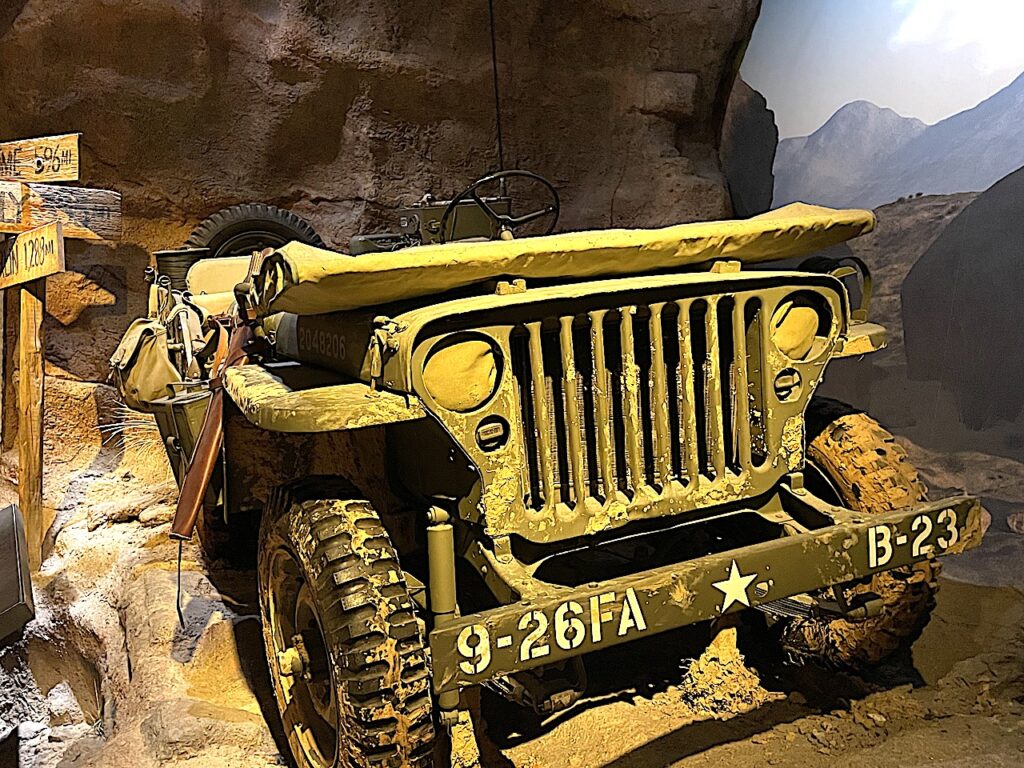
The museum covers major military campaigns, the American home front, the Pacific Theater, and the D-Day landings. It also highlights the personal stories of those who served and the war’s impact on individuals and communities. The National WWII Museum earns high praise, being ranked as one of the top museums in the nation.
National World War II Museum: 945 Magazine St, New Orleans
Lunch at Napoleon House
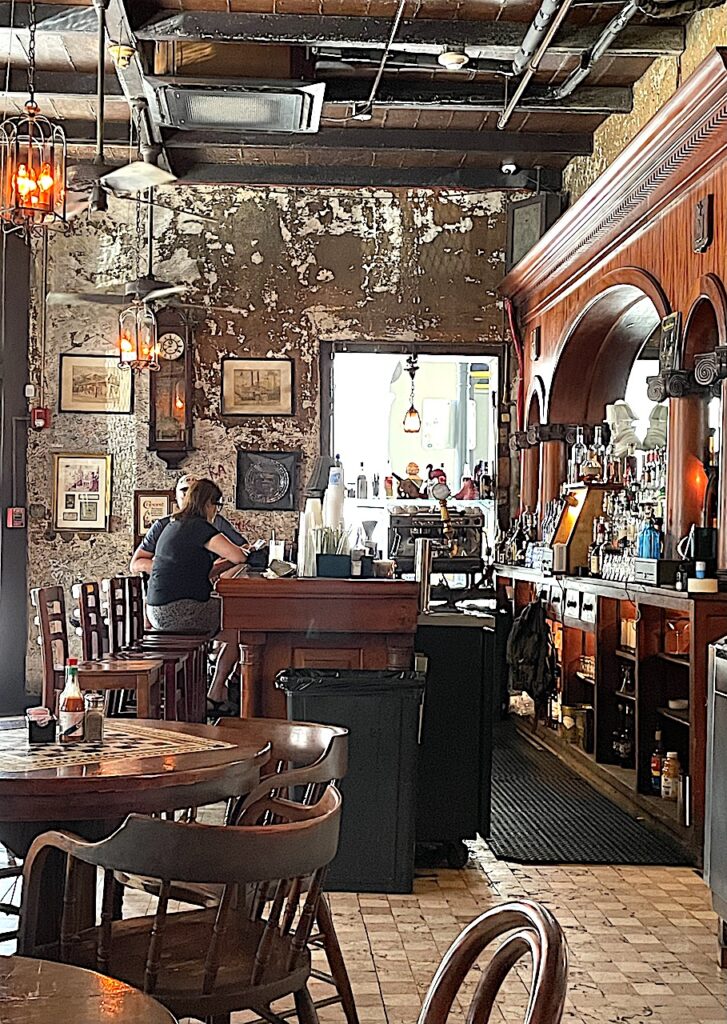
After touring the World War II Museum, we enjoyed lunch at the Napoleon House with a Pimm’s Cup cocktail and a Muffuletta. I must say that this was one of the best meals we had during our trip. Step into history, where old-world charm, courtyard dining, and timeless hospitality combine to create a truly unique experience.
Napoleon House: 500 Chartres St, New Orleans
Dinner at Blue Bayou Restaurant & Oyster Bar
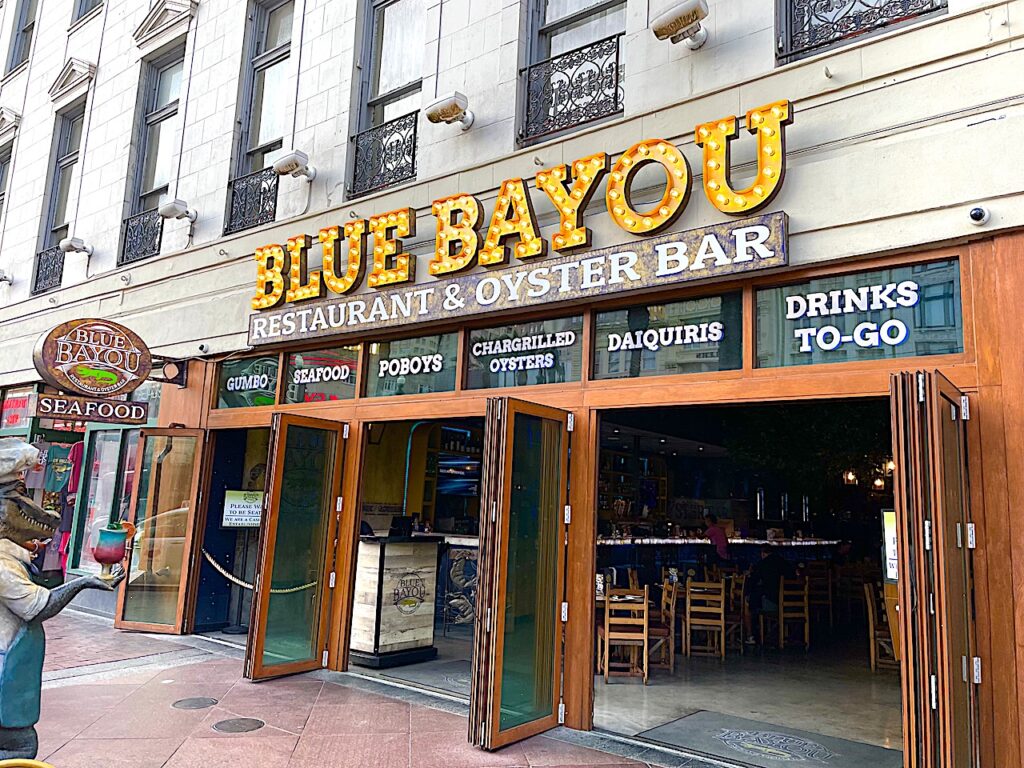
Step into the bayou when you step into the stunning Blue Bayou restaurant on Canal Street in New Orleans. The restaurant boasts a captivating interior featuring a 30-foot oak tree, Spanish moss, and charming lanterns, which create a serene bayou ambiance. The menu showcases the best of Louisiana’s local cuisine, featuring fresh seafood and Southern classics. Blue Bayou offers a taste of New Orleans tradition.
Blue Bayou Restaurant & Oyster Bar 717 Canal Street. New Orleans
Carousel Bar and Lounge
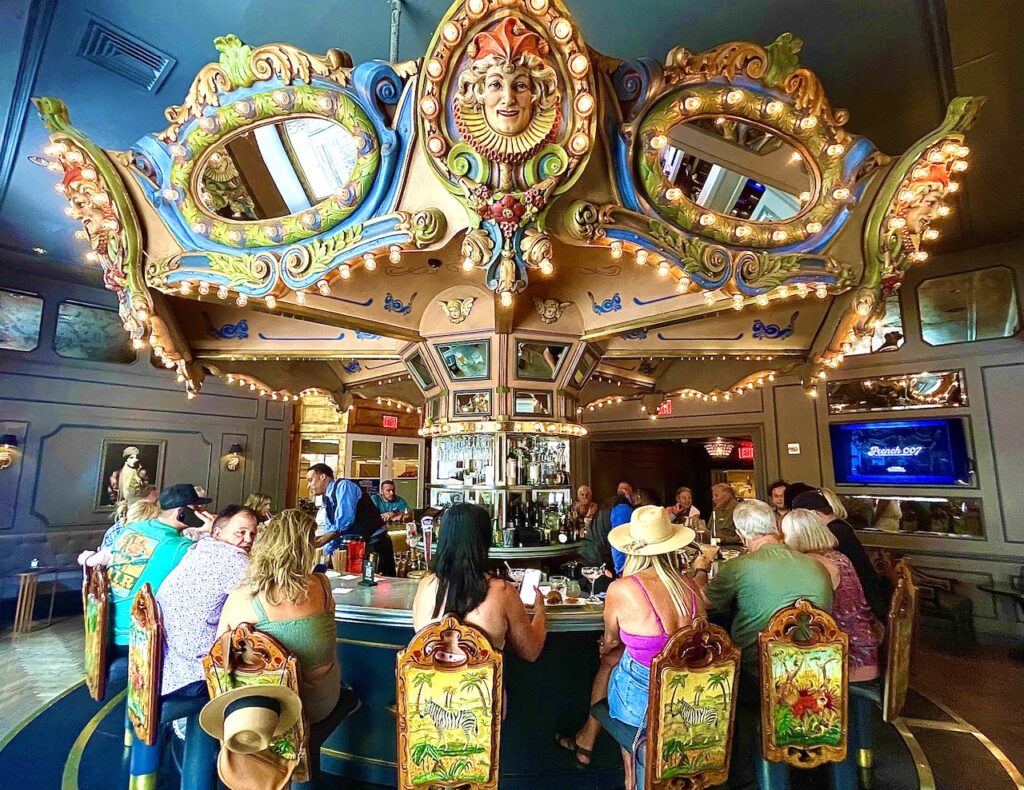
Sitting at the Carousel Bar with hand-painted chairs is a one-of-a-kind experience. The carousel itself surprisingly rotates, making it a popular destination in the Hotel Monteleone. Because of this, it can be difficult to find a spot at the actual rotating bar; however, there is plenty of open seating surrounding the carousel! The bar also features live music, adding to its lively atmosphere. The bar mixes the best classic New Orleans cocktails, including the Vieux Carré, which was created at the hotel in 1938, and the Sazerac. The Carousel Bar and Hotel Monteleone is known for attracting many notable guests and inspiring writers, including Tennessee Williams, Truman Capote, and William Faulkner
The Carousel Bar opens 11 a.m.- 12 p.m. daily.
Carousel Bar & Lounge: 214 Royal Street, New Orleans
Day Three in New Orleans
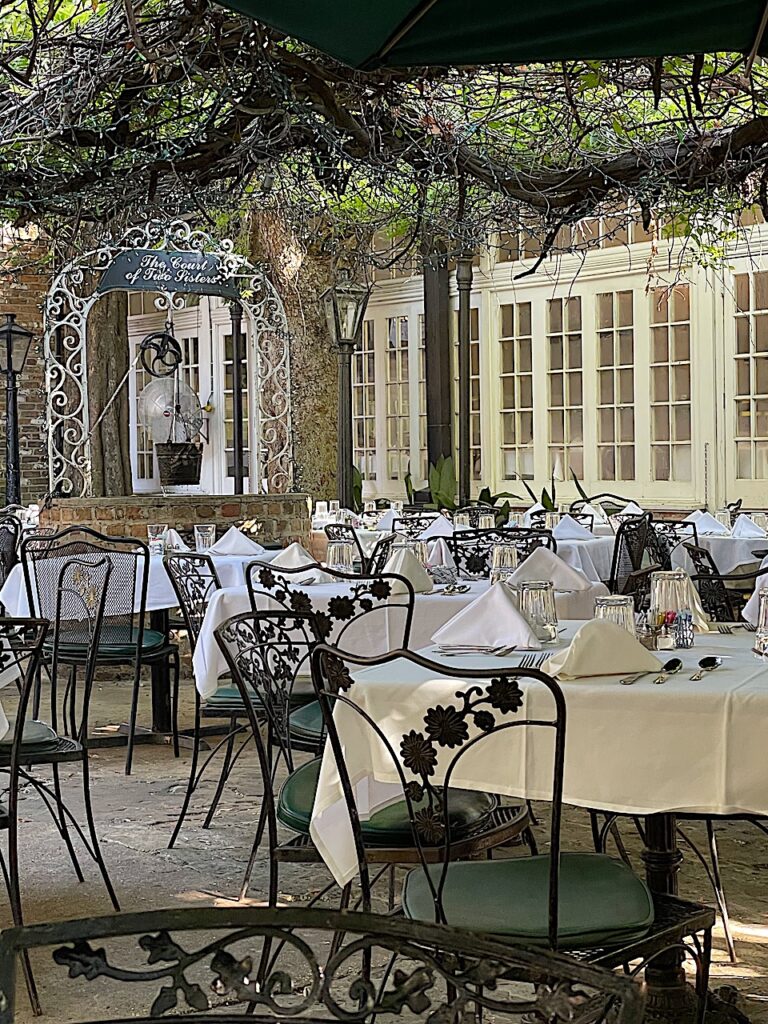
After a late night out, we slept in before heading to a hearty brunch at The Court of Two Sisters that will keep you full for the day.
Jazz Brunch at Court of Two Sisters
You can enjoy your most important meal of the day at this legendary restaurant, which offers a beautiful courtyard and a daily jazz brunch of Creole classics and à la carte options. However, this isn’t just any brunch. This brunch experience includes live jazz music and an all-you-can-eat buffet. Enjoy breakfast classics like glazed ham, scrambled eggs, hash browns, biscuits, and build-your-own omelets. Don’t forget New Orleans specialties such as chicken and sausage gumbo, shrimp etouffee, and red beans and rice. Its Creole Louisiana fare is classic, and the Bananas Foster is one of the city’s favorites.
The Court of Two Sisters: 613 Royal St, New Orleans
Take the Streetcar to the Garden District
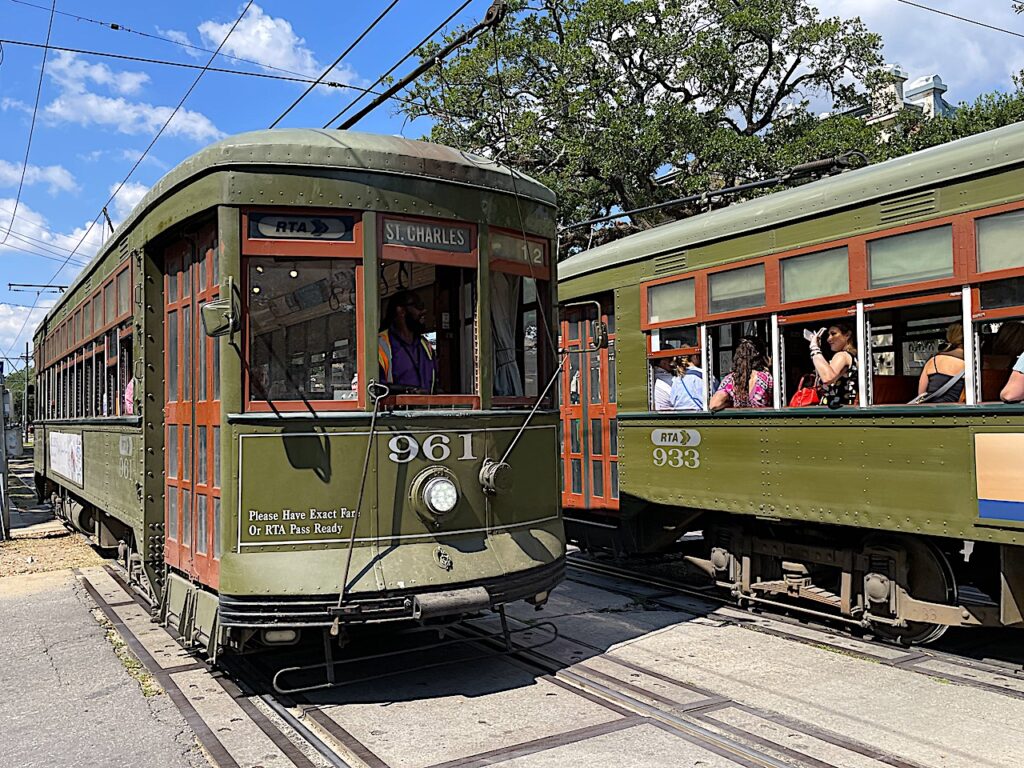
After brunch, jump on a streetcar for a ride along St. Charles Avenue into the Garden District, where the streets are lined with historic mansions and magnolia trees. The St. Charles Avenue Streetcar in New Orleans is the oldest continuously operating streetcar line in the world, dating back to 1835. The New Orleans streetcars are an affordable and easy way to get from one end of town to another. The girl in the window was celebrating her birthday. A unique New Orleans birthday tradition is pinning a dollar bill to your chest. As you move through the city, friends, family, and even strangers will add their own dollars to your pin, creating a celebratory way to help fund your birthday drinks or treats. I have a birthday coming up soon. Hmmmmm!
The Garden District
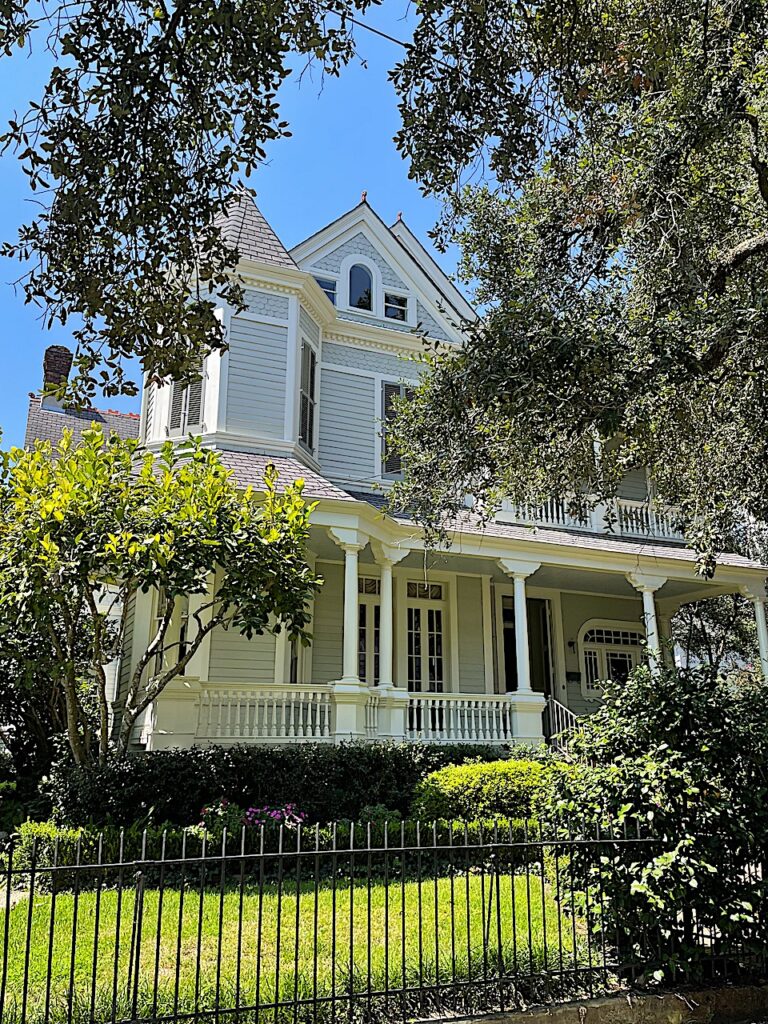
In the charming Garden District, oak-shaded streets are lined with a diverse mix of homes, from single-story cottages to the grand historic mansions and lavish gardens of St. Charles Avenue, on the Mardi Gras parade route. It’s a contrasting part of New Orleans, and walking around the neighborhood makes you feel as if someone will step out any minute to offer you a glass of sweet tea and a conversation on their wrap-around porch.
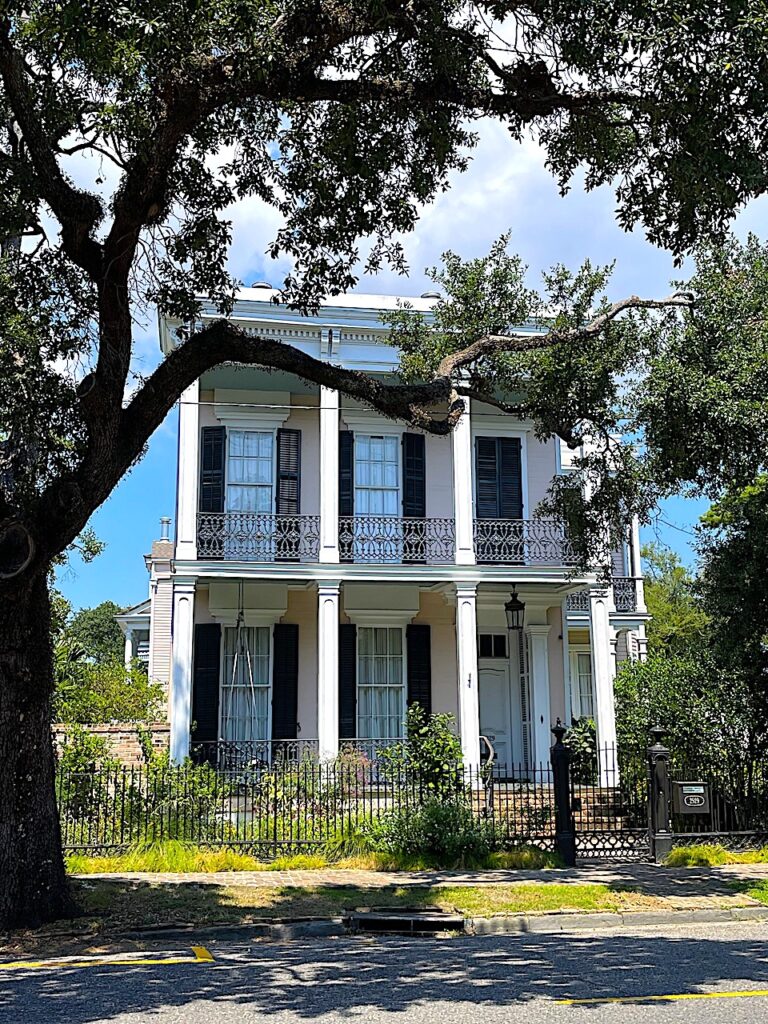
We did not get a chance to eat here, but I will include it since we walked past it. The Commander’s Palace is located just steps away from the streetcar stop on Washington Avenue in the historic New Orleans Garden District. Chefs such as Paul Prudhomme and Emeril Lagasse have worked here. Many folks we talked to on our trip recommended this restaurant. They do have a dress code, so check that out before going.
The Commander’s Palace: 1403 Washington Ave, New Orleans
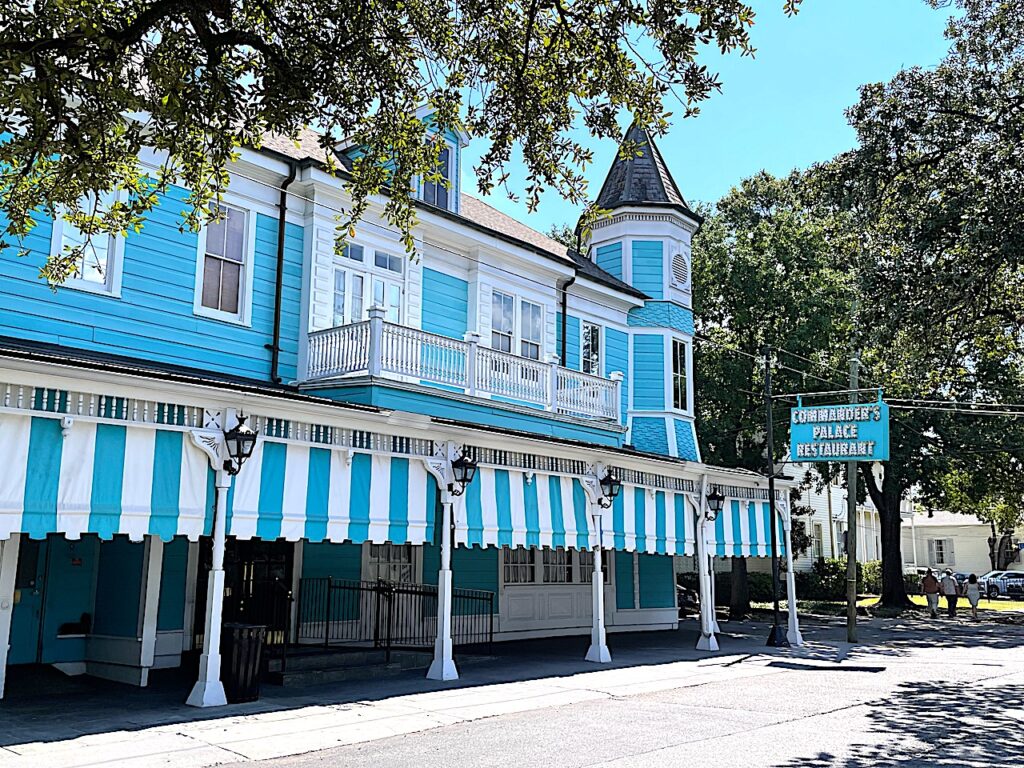
It’s as if you’ve taken a step back in time. If you want to experience southern charm in full grandeur, a trip through the Garden District won’t let you down. I would suggest finding a tour for this district. We walked around a lot and saw many beautiful houses, but missed many of the more famous dwellings.
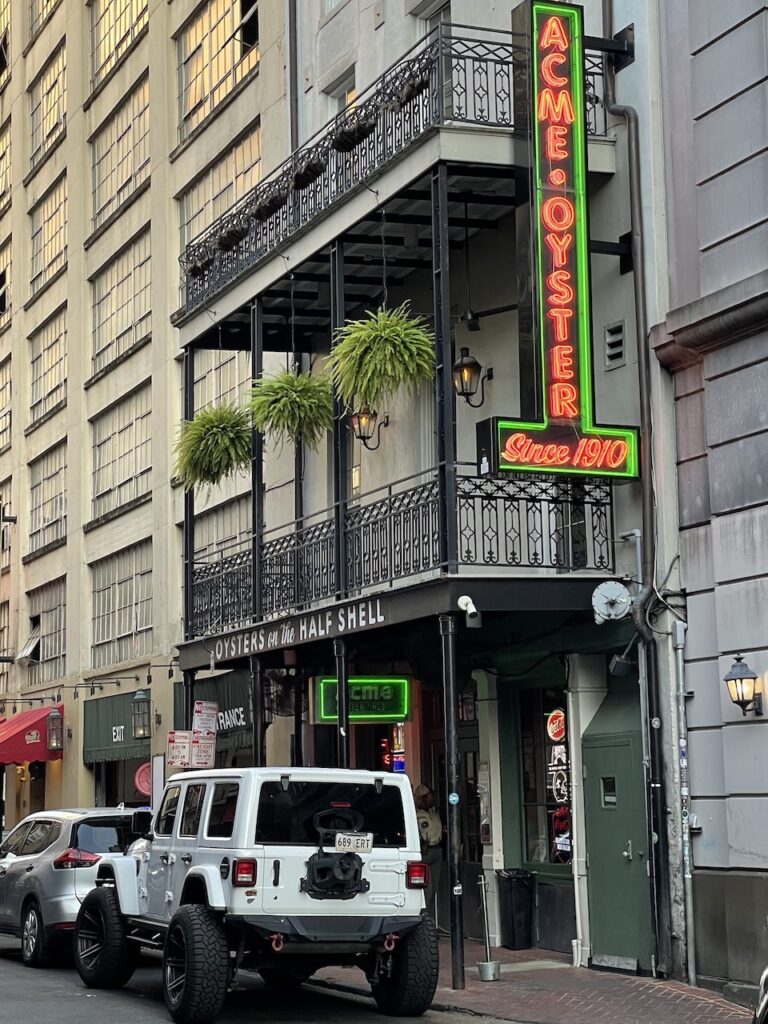
Dinner at Acme Oyster House
Serving up delicious seafood since 1910, Acme Oyster House is the place to go for grilled oysters. Besides oysters, they offer dishes made with seafood and New Orleans specialties, including jambalaya and gumbo. Just off Bourbon Street, Acme is a timeless New Orleans establishment, popular with locals for generations. A vintage slice of New Orleans life in a casual, down-home atmosphere.
Acme Oyster House: 724 Iberville St, New Orleans
Jazz on Frenchmen Street
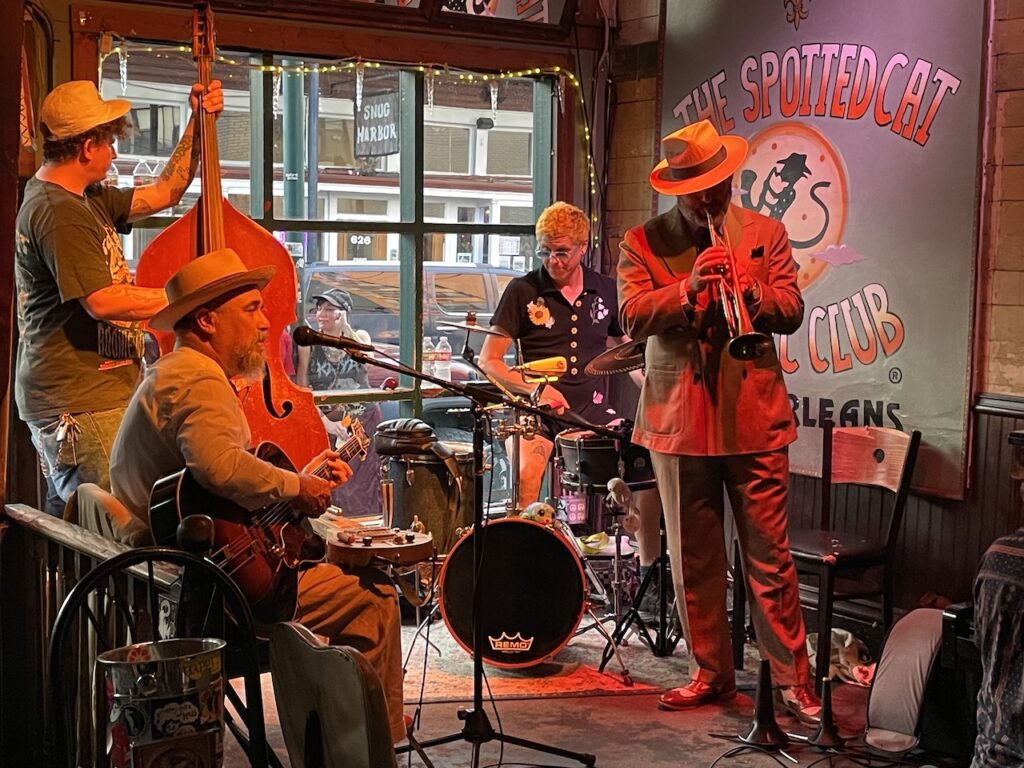
While most people head to Bourbon Street for music and drinks, I found Frenchmen Street more enjoyable. Frenchmen Street is teeming with cool jazz clubs and hip restaurants, offering a more subdued atmosphere compared to Bourbon Street. Pop in and listen to some jazz at the Spotted Cat, The Maison, or Bamboula’s, to name a few.
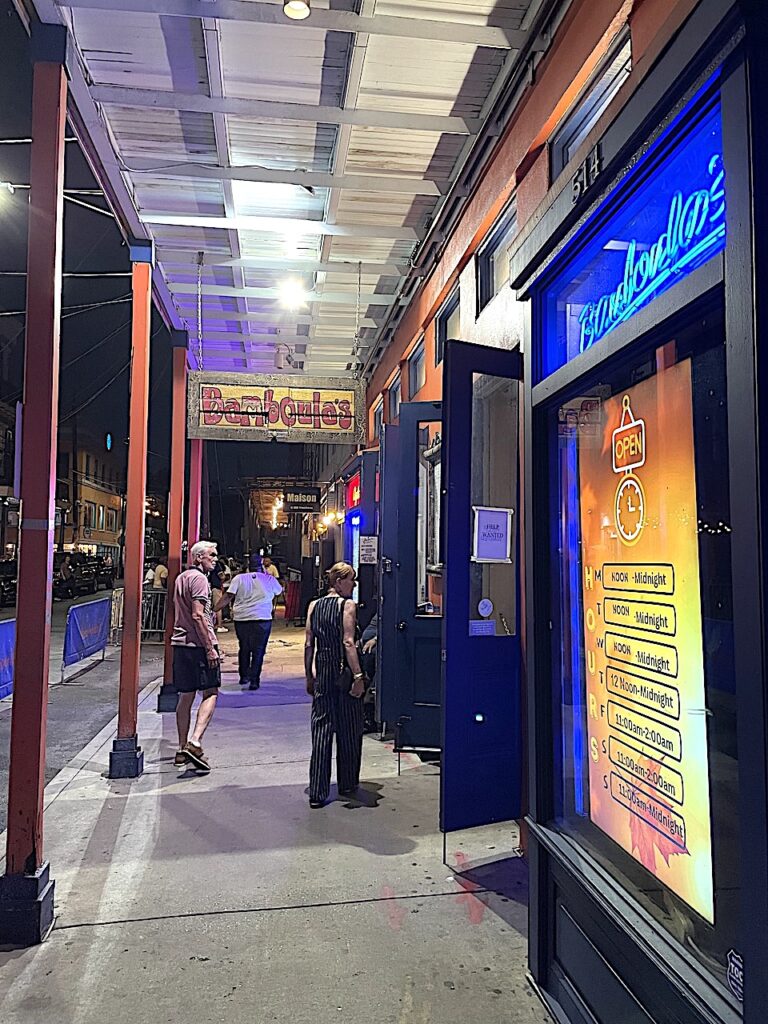
Frenchmen Street in New Orleans is a popular spot for both tourists and locals, often referred to as a “locals’ Bourbon Street” due to its focus on live music and a more authentic New Orleans experience.
Day Four: Leaving New Orleans
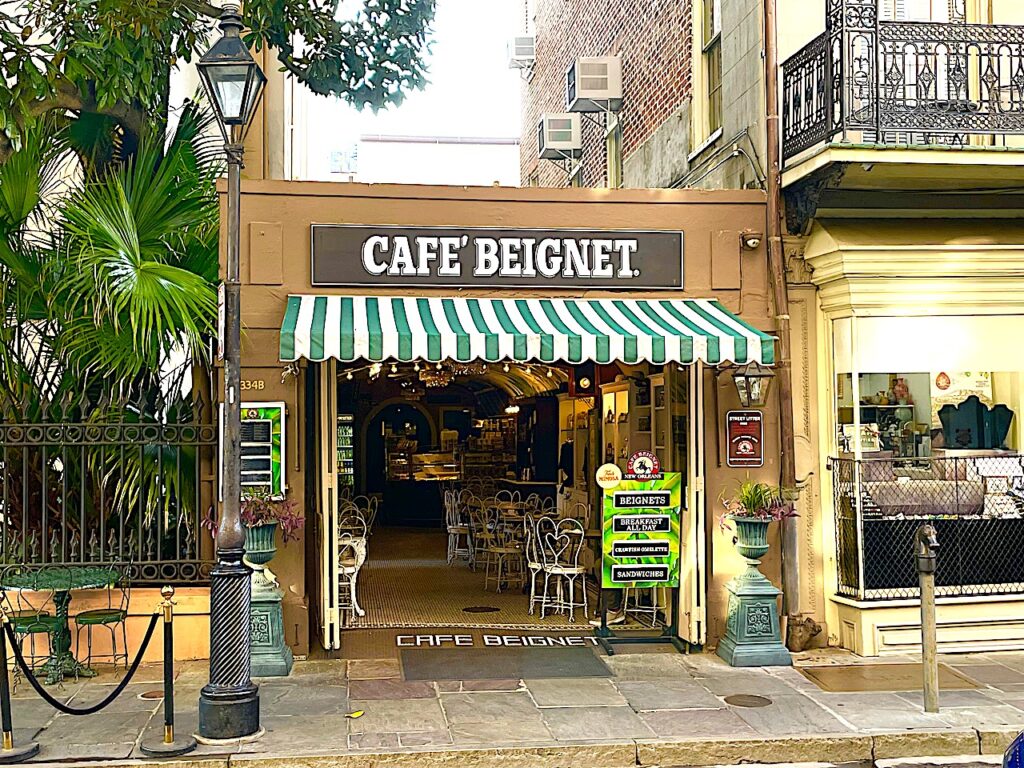
Cafe Beignet (Royal Street)
This morning, we flew back to Florida, but we just had to stop for more of those sugary puffs of fried dough. Café Beignet is a much cuter spot for photos and beignets, plus it’s typically far less crowded than Café du Monde. Their outdoor courtyard has a European feel with a French Cafe vibe. We were there at their Royal Street location when they opened with a free Cafe du Latte coupon that we got at the hotel.
Cafe Beignet: 334 Royal St, New Orleans
And that’s a Wrap:
Roaming around the French Quarter, indulging in delicious Cajun seafood delights, listening to live jazz on the corners, and roaming through the beautiful Garden District were just a few of the highlights I won’t soon forget.
More Southern Charm
If you enjoyed New Orleans and crave more Southern Charm, think about heading to Savannah, Georgia. New Orleans and Savannah are two Southern cities with rich history, gorgeous architecture, live oak trees, and that classic Southern charm. We spent One Day in Savannah, and there is truly something magical there.